

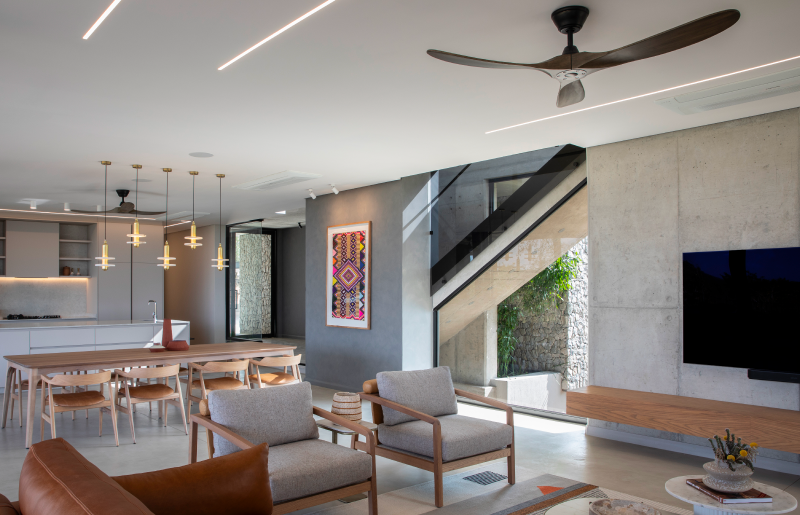
Installing a ceiling fan correctly is just as important as selecting the right fan. Ceiling fans are weight-bearing, moving fixtures, and the ceiling structure plays a critical role in safety, performance, and long-term reliability.
Understanding your ceiling type before installation helps ensure your fan runs smoothly, quietly, and securely for years to come.

Concrete / Cement Ceilings
Ceiling fans now offer a range of features that heighten their appeal. Advanced whisper-quiet BLDC motors ensures a tranquil environment, allowing the cool breeze they provide to lull one into a state of relaxation and comfort. Variable speed settings allow for a customised experience, tailoring the airflow to suit one’s desires.
Installation considerations:
- Fans must be fixed directly into the concrete slab
- Appropriate anchors or expansion bolts must be used
- Electrical wiring should be properly chased or protected in conduit
When installed correctly, concrete ceilings provide excellent stability and are well suited to larger or heavier fans.
Ceiling Board / Gypsum Ceilings
Ceiling board on its own is not designed to support the weight or movement of a ceiling fan.
Key requirement:
- A solid timber or steel beam must be present above the ceiling board
- The fan must be fixed through the ceiling board and securely into this beam
- If no beam exists, reinforcement is required prior to installation
Installing a fan directly into ceiling board without reinforcement is unsafe and may result in vibration, noise, or failure over time.


Reinforced Ceiling Board with Trusses
In many residential homes, ceiling boards are supported by timber trusses.
What to check:
- The installer must locate a load-bearing truss or beam
- Additional bracing may be required for larger fans
- Fixing points must be accurately centred
- May need a horizontal mounting block at the apex for the fan to stabilize
When properly reinforced, this ceiling type is ideal for residential ceiling fan installations.
Apex Ceilings & Exposed Beams
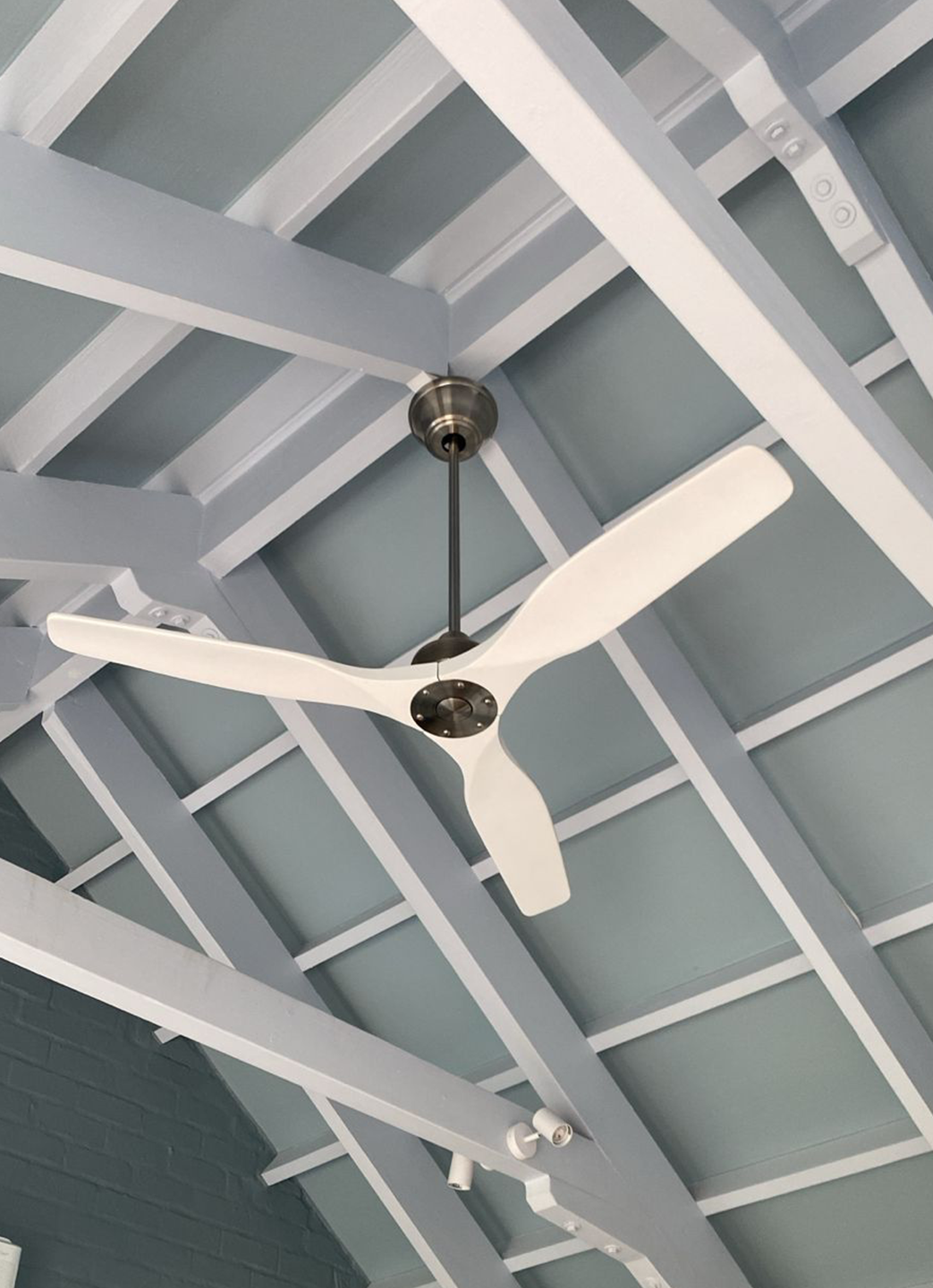
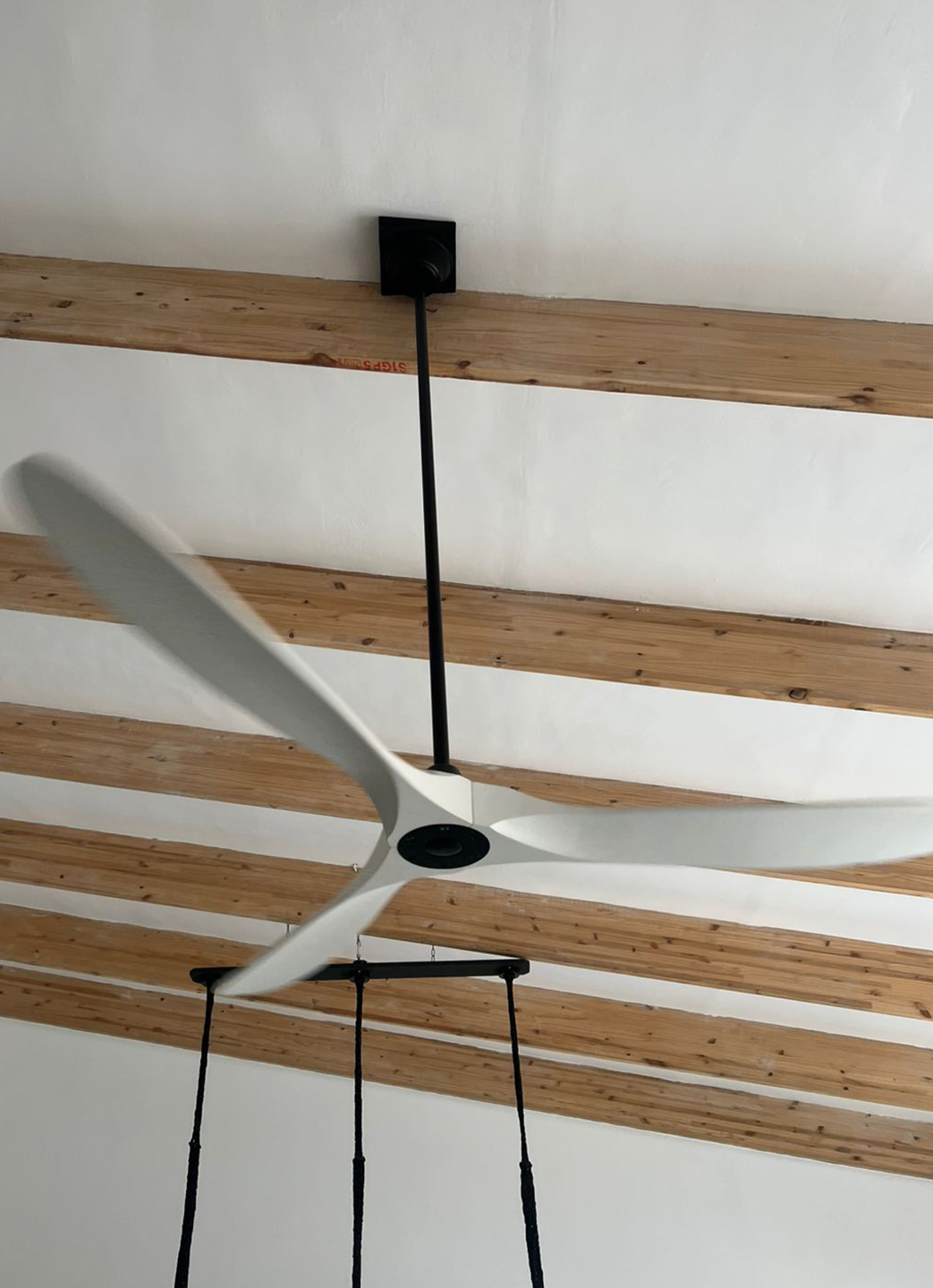
Apex ceilings and exposed beams offer a beautiful architectural feature and are well suited to ceiling fans.
Installation notes:
- Fans are mounted directly onto exposed beams
- Beam strength and depth must be assessed
- Correct downrod length is essential for airflow and aesthetics
These installations often require custom downrod lengths to ensure optimal performance.
Sloped or Angled Ceilings
Sloped ceilings can accommodate ceiling fans, provided the correct components and angles are used.
Important factors:
- Ceiling angle must fall within the fan’s allowable slope range
- A horizontal mounting base is likely to be required (your electrician or builder will be able to help you to make up a horizontal mounting base)
- Downrod length must compensate for ceiling height and angle
Proper planning ensures smooth, balanced operation without wobble.
Why Professional Installation Matters
Ceiling fans must be installed by a qualified electrician who can assess ceiling structure, fixings, and electrical supply.
At Timber Fans, we strongly recommend professional installation to ensure:
- Safe, secure mounting
- Quiet, efficient operation
- Long-term durability
Choosing the right fan is only half the job — correct installation makes all the difference.
Need Help Before You Install?
If you’re unsure about your ceiling type or installation requirements, our team is happy to assist before purchase.
A little planning upfront ensures your ceiling fan performs exactly as it should.