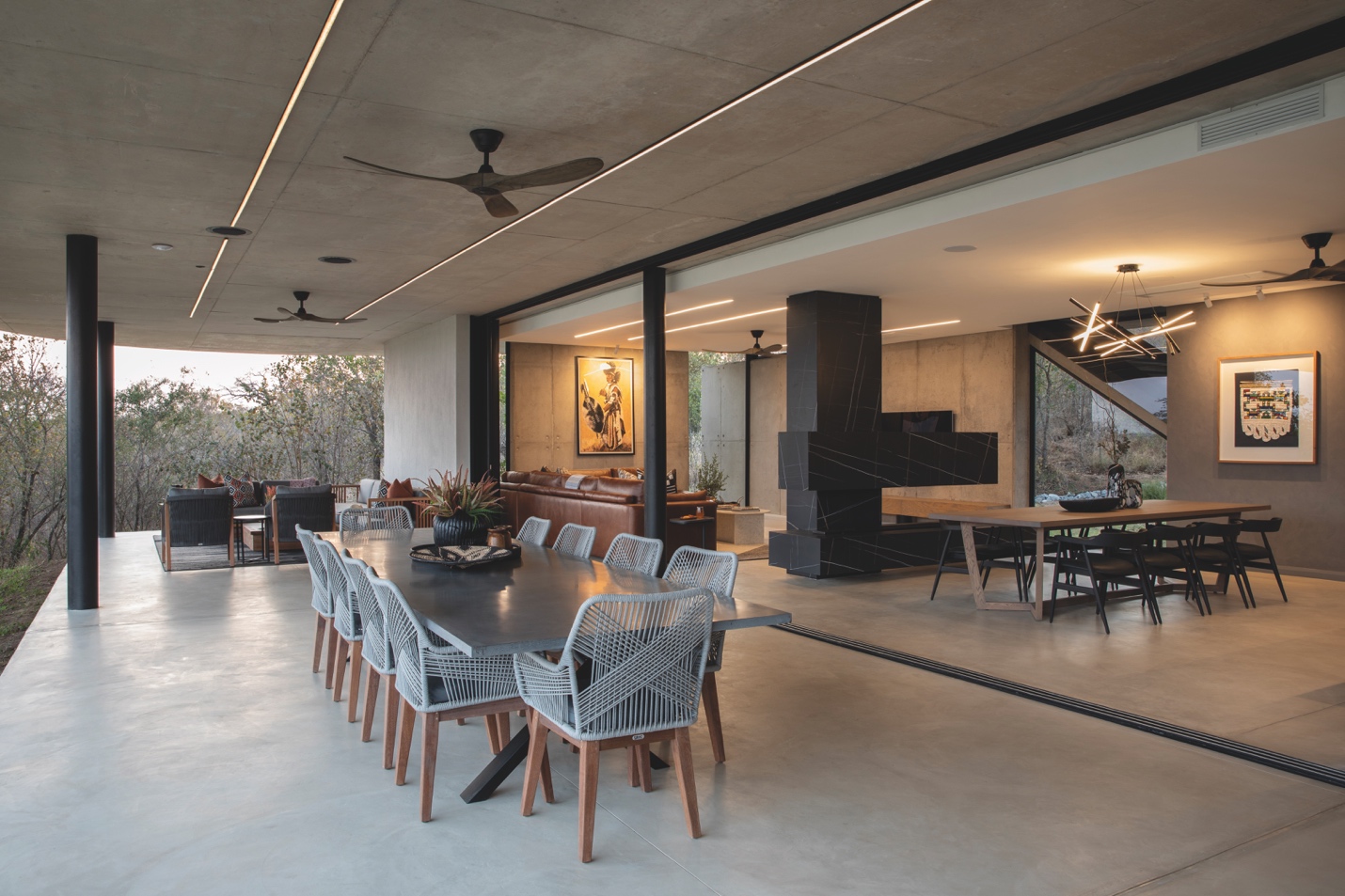
A covered patio is one of the most enjoyable spaces in a South African home. Whether you’re relaxing with family or entertaining friends, a ceiling fan can make the space more comfortable while adding natural warmth and style.
If you’re considering a wooden ceiling fan for a covered patio, particularly in a coastal or tropical environment, there are a few things to consider.
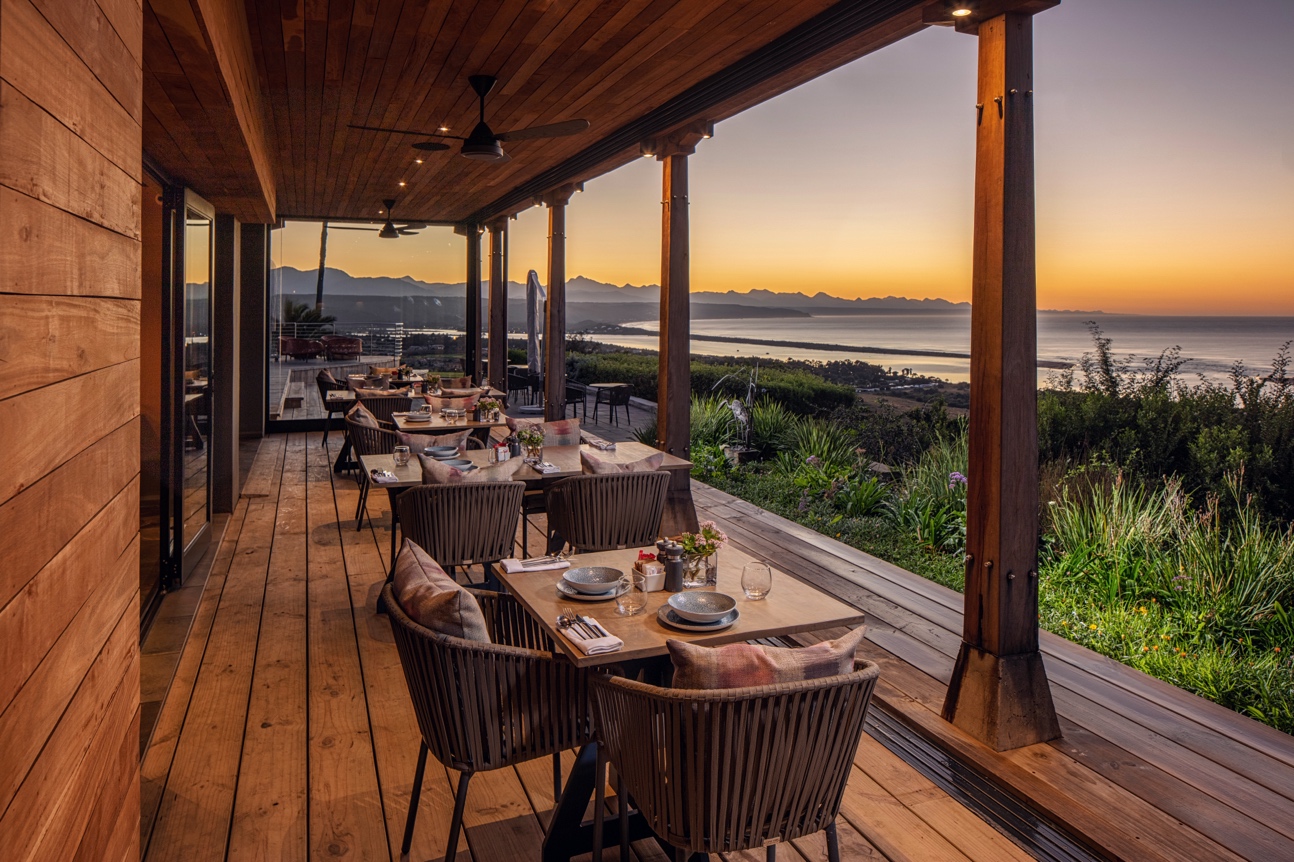
Are Wooden Ceiling Fans Suitable for Covered Patios?
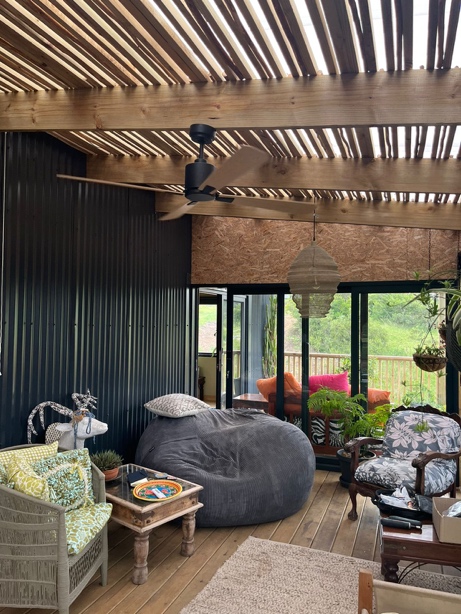
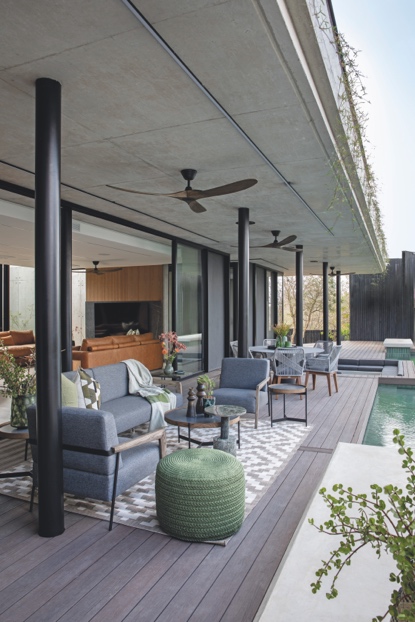
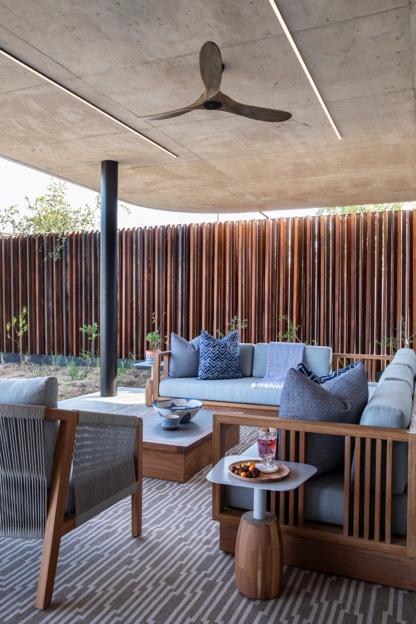
Yes. Wooden ceiling fans can be a great choice for covered outdoor areas, provided they are installed in a suitably sheltered location. Many Timber Fans customers have installed our fans in covered patios, entertainment areas and coastal homes.
Our fans are a damp-location version: the metal components receive an anti-rust treatment to provide additional protection against corrosion.
It’s important to remember, however, that damp location does not mean waterproof. Our fans should not be exposed to direct rain, persistent leaks or regular wind-driven water.
How Does a Ceiling Fan Work on an Open-Sided Patio?
A ceiling fan cools you by moving air across your skin, helping your body release heat.
On an open-sided patio, some of that airflow naturally disperses beyond the space rather than being contained by walls. You will still enjoy a refreshing breeze, particularly when sitting beneath the fan, but the cooling effect may be less concentrated than it would be indoors.
The size and position of the fan matters. You may need multiple fans across a large patio area. Choose a fan suited to the size of the space and position it where you spend the most time.
Damp Location & Coastal Environments

Our damp location fans are designed for environments where humidity and moisture in the air may be higher than indoors.
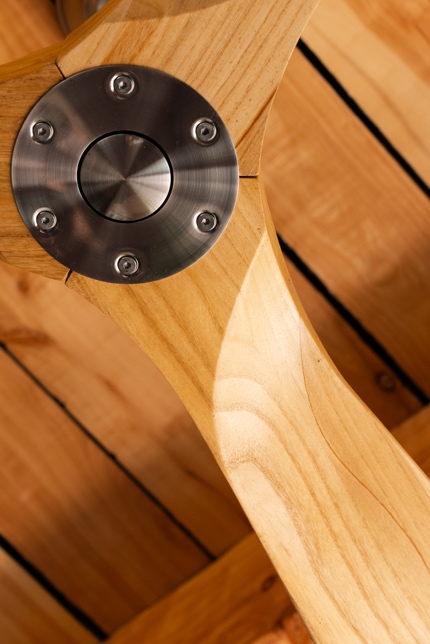
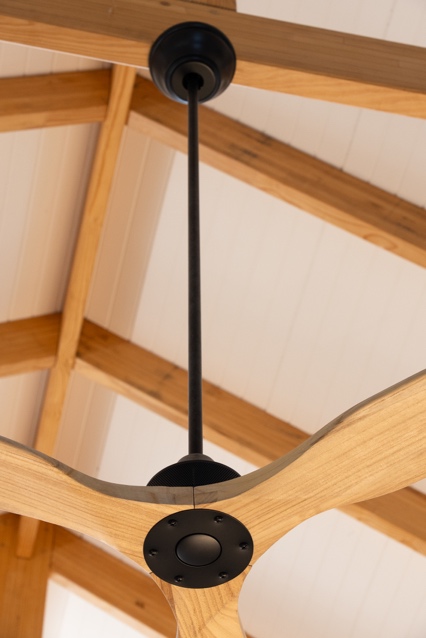
Blade screws are stainless steel, while the remaining metal components are nickel-plated mild steel, providing enhanced protection in tropical and damp environments.
Our fans have been installed successfully in coastal and tropical locations, including Mauritius, Seychelles and Mozambique. However, conditions vary considerably. A property directly on the seafront will experience greater exposure to salt-laden air than a more sheltered coastal home.
With suitable placement and care, our experience is that the damp location finish performs well in most coastal and tropical environments.
Wooden Blades: Strength & Stability
Our Monaco and Sirocco ranges feature laminated Paulownia hardwood blades. Paulownia is lightweight and has a high strength-to-weight ratio, while lamination helps improve stability and reduce the risk of warping, shrinkage and splitting.
Our Fern, Classic and Piccolo blade sets are manufactured from laminated veneer and sealed with a protective finish.
While these construction methods provide excellent stability, wooden blades are not waterproof. Prolonged exposure to water or extreme environmental conditions could affect the timber.

Important Installation Considerations

A few simple checks can help ensure your fan performs well for years to come:
- Keep it sheltered: Make sure the fan is protected from direct rain and wind-driven water.
- Check for leaks: Resolve any roof or ceiling leaks before installation. Water entering through the mounting area can cause corrosion and damage internal components.
- Consider exposure: Take prevailing winds, proximity to the sea and the overall exposure of the patio into account.
- Install correctly: Follow the manufacturer’s installation instructions and ensure electrical work is carried out by a qualified electrician.
- Maintain your fan: Periodically check for corrosion, water marks or deterioration and keep the fan clean and dry.
If your patio is particularly exposed to strong or persistent winds, we recommend discussing the installation with Timber Fans before proceeding.
What If Rust Develops?
Even with a damp location finish, some surface rust may eventually occur in particularly harsh coastal environments.
However, rust would not normally be expected soon after installation in a properly sheltered environment. If rust appears early, check for water leaks or direct exposure to rain before considering replacement.
Replacement metal components and spares are available from Timber Fans if required.
Choosing the Right Fan
When choosing a wooden ceiling fan for a covered patio, consider the level of shelter, climate, patio size and exposure to moisture and wind.
If you’re unsure whether a particular Timber Fans model is suitable for your outdoor space, our team is happy to advise.